
TMJ Disorder: Symptoms, Causes and When to Get Help
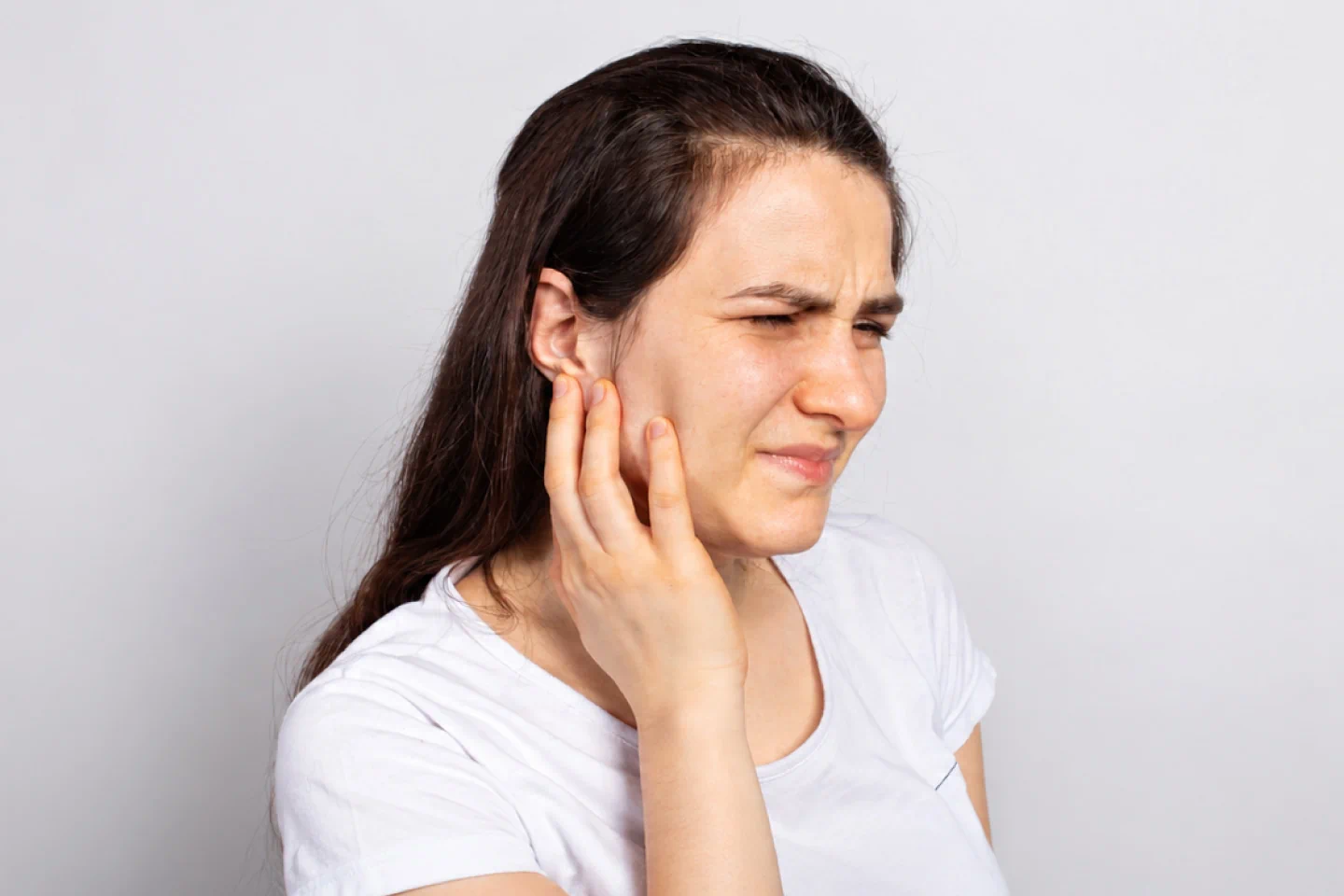
Jaw pain, clicking when you open your mouth or trouble chewing can point to a problem with the temporomandibular joint, or TMJ. Many cases settle with simple self care, but pain that persists, spreads or comes with locking deserves a proper assessment.
Here is what the symptoms mean, what can cause them and when I would want to see you.
What Is a TMJ Disorder?
The temporomandibular joints sit on either side of your head, just in front of your ears, and connect your lower jaw to your skull. They let you chew, speak, yawn and swallow.
According to the US National Institute of Dental and Craniofacial Research, temporomandibular disorders (TMDs) are a group of more than 30 conditions that cause pain and affect jaw movement. They broadly involve the joints, the chewing muscles, or headaches linked to the jaw, and a person can have more than one at the same time.
Clicking or popping without pain is common and does not usually need treatment.
Common Symptoms
Jaw pain or tenderness. Pain in front of the ears, along the jawline or in the chewing muscles, often worse when eating, yawning or opening wide. It can spread to the cheeks, temples or neck.
Clicking, popping or grinding sounds. Noise on its own is not a reason for treatment. If it comes with pain, stiffness, restricted movement or locking, get it checked.
Difficulty opening or closing your mouth. The jaw may feel stiff in the morning or sore when eating larger food. If it locks open or closed, seek help promptly.
Headaches and facial pain. Tension in the chewing muscles can contribute to headaches around the temples, though headaches have many causes.
Ear discomfort. Because the joints sit close to the ears, TMJ problems can cause ear pain, a feeling of fullness or ringing. These symptoms are not specific to the jaw, so persistent ear symptoms need assessment.
Jaw stiffness or fatigue. Tired, tight or sore jaw muscles after chewing, talking or waking up can be linked to clenching or grinding.
A toothache or infection can also cause jaw and ear pain, so it is worth reading my guide on toothache at night and when it is an emergency if the pain seems to come from a tooth.
What Causes a TMJ Disorder?
There is no single cause. In many cases the exact reason is unclear, and symptoms start without an obvious trigger.
Grinding and clenching. These habits can strain the muscles and joints, although not everyone who grinds develops a TMJ disorder.
Jaw injury. A blow to the jaw, face or head can affect the joint or surrounding muscles. New symptoms after an injury should be assessed promptly.
Arthritis and joint changes. Some forms of arthritis can affect the jaw joints and may need medical or specialist input.
Stress and muscle tension. Stress can lead to clenching and make pain more noticeable. I explain more in my post on how stress affects your oral health.
A bad bite. This is a common belief, but NIDCR says research does not support the idea that a bad bite or orthodontic treatment causes TMDs. Treatment should be based on a proper assessment, not on assumptions about the bite alone.
How Is It Diagnosed?
There is no single test. I start by asking where the pain is, when it began, what makes it worse, whether you hear clicking or experience locking, whether you grind or clench, and about any past jaw injury.
The examination checks how your jaw moves, whether the chewing muscles are tender and whether there are joint sounds. I also look at your teeth and bite for other sources of pain. Imaging such as dental X rays, a CT scan or an MRI is used only when the findings call for it.
Because tooth infections, ear conditions and headaches can cause similar symptoms, finding the cause comes first. If your symptoms point to something that needs further investigation, I will advise you to see the appropriate healthcare professional. Problems like these are also among the things a regular examination can pick up, as I describe in dental problems your dentist can detect before they become serious.
How Is It Managed?
NIDCR notes that many TMDs last only a short time and go away on their own, and that experts recommend the most conservative, reversible treatments possible. That matches how I approach it.
Self care and jaw rest. For mild symptoms:
- Choose softer foods and cut food into smaller pieces
- Avoid chewing gum and very hard or chewy foods
- Avoid opening your mouth very wide
- Apply a warm or cold compress, whichever feels better
- Gently massage sore jaw muscles if it does not worsen the pain
Try to notice daytime clenching. When you are not eating, keep your teeth apart and your jaw relaxed.
Managing grinding. If grinding contributes, I check for tooth wear and discuss options. A custom night guard may protect the teeth in selected cases, but it does not resolve every type of TMJ disorder.
Pain relief. A healthcare professional can advise on suitable pain relief based on your symptoms and medical history. Persistent pain needs assessment, not just painkillers.
Physiotherapy and support. Some people benefit from physiotherapy, gentle jaw exercises, stress management and better sleep habits.
More complex treatments are considered only when the findings support them. I would not recommend permanent changes to your teeth or bite on the assumption that they will fix a TMJ disorder.
When Should You See a Dentist?
Occasional painless clicking may not need treatment. Book an assessment if you notice:
- Repeated jaw pain or tenderness
- Pain when chewing or speaking
- Painful clicking or grinding sounds
- Difficulty opening your mouth fully
- Episodes of jaw locking
- Tooth wear or sensitivity that may come from grinding
- Symptoms that interfere with eating, sleeping or daily activities
Seek urgent medical care if you cannot eat or drink, or your jaw is stuck and will not move normally. Jaw pain with chest pain, breathlessness or sweating needs emergency medical attention, not a routine dental visit. Sudden symptoms after an injury, or with significant swelling or fever, also need prompt care. For urgent dental problems, see my guide to emergency dental care near Orchard Road.
Can You Prevent It?
Not always, especially when injury or joint disease is involved. These habits help reduce strain:
- Avoid chewing ice or biting hard objects
- Limit prolonged gum chewing
- Relax daytime clenching
- Avoid opening wider than necessary
- Manage stress with techniques that suit you
- Keep up regular dental checkups
If you already have symptoms, avoid strenuous jaw exercises, and never try to force a locked jaw back into place.
Is It a Long Term Condition?
It varies. Many TMDs are short lived and improve with conservative care, while others recur or persist. A diagnosis does not automatically mean extensive treatment. Often, finding what aggravates the jaw and adjusting it is enough. Symptoms that persist or interfere with daily life deserve further assessment, and I can advise whether monitoring, conservative care or referral is right for you.
Frequently Asked Questions
Q. What is the difference between TMJ and TMD?
TMJ is the temporomandibular joint itself. TMD refers to the disorders that affect the joint, the surrounding muscles or both. People often use the terms interchangeably.
Q. Does jaw clicking always mean I have a TMJ disorder?
No. Clicking without pain or restricted movement is common. Painful clicking, locking or difficulty opening should be assessed.
Q. Can stress cause a TMJ disorder?
Stress can lead to clenching and muscle tension, which may make symptoms worse, but it is not the cause in every case.
Q. Can a dentist treat a TMJ disorder?
A dentist can assess your jaw movement, muscles, teeth and bite. Depending on the findings, care may include self care advice, a night guard in selected cases, or referral for physiotherapy or specialist assessment.
Q. How can I relieve TMJ pain at home?
For mild symptoms, eat softer foods, avoid gum and hard foods, apply a warm or cold compress and keep your jaw relaxed. Do not force painful movements, and seek advice if symptoms persist or worsen.
Q. When should TMJ pain be treated as urgent?
If your jaw is stuck, you cannot eat or drink, or you have a severe headache with vision changes. Jaw pain with chest pain, breathlessness or sweating is a medical emergency.
Get Your Jaw Symptoms Assessed
If you have recurring jaw pain, painful clicking or difficulty moving your mouth, I can examine you and advise on the next step. You can book an appointment.
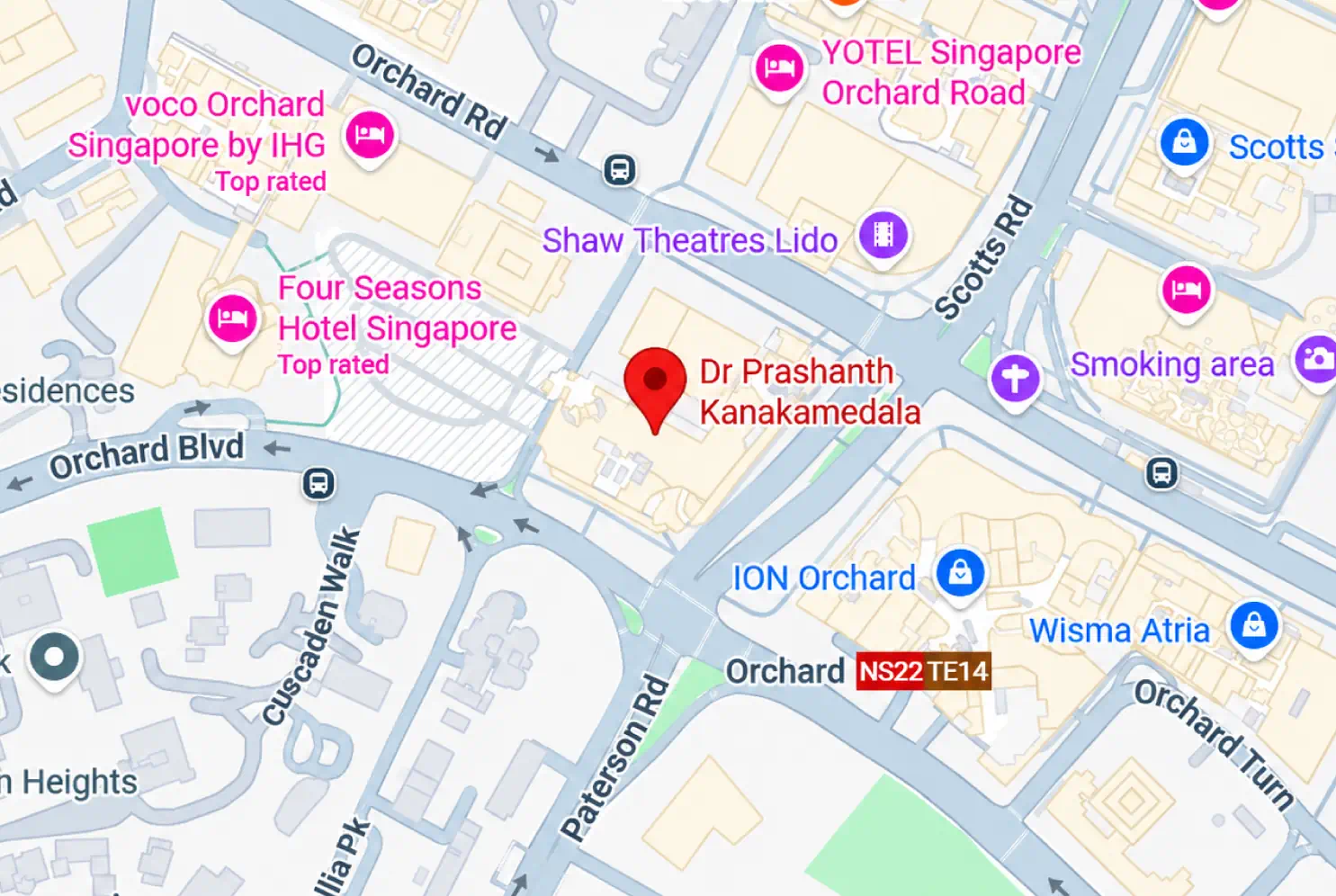


Landmark Orchard
501 Orchard Rd, #05-01 Nuffield Dental Jewel, Landmark Orchard, Singapore 238880
Available on Mondays, Tuesdays, Thursdays and Saturdays.
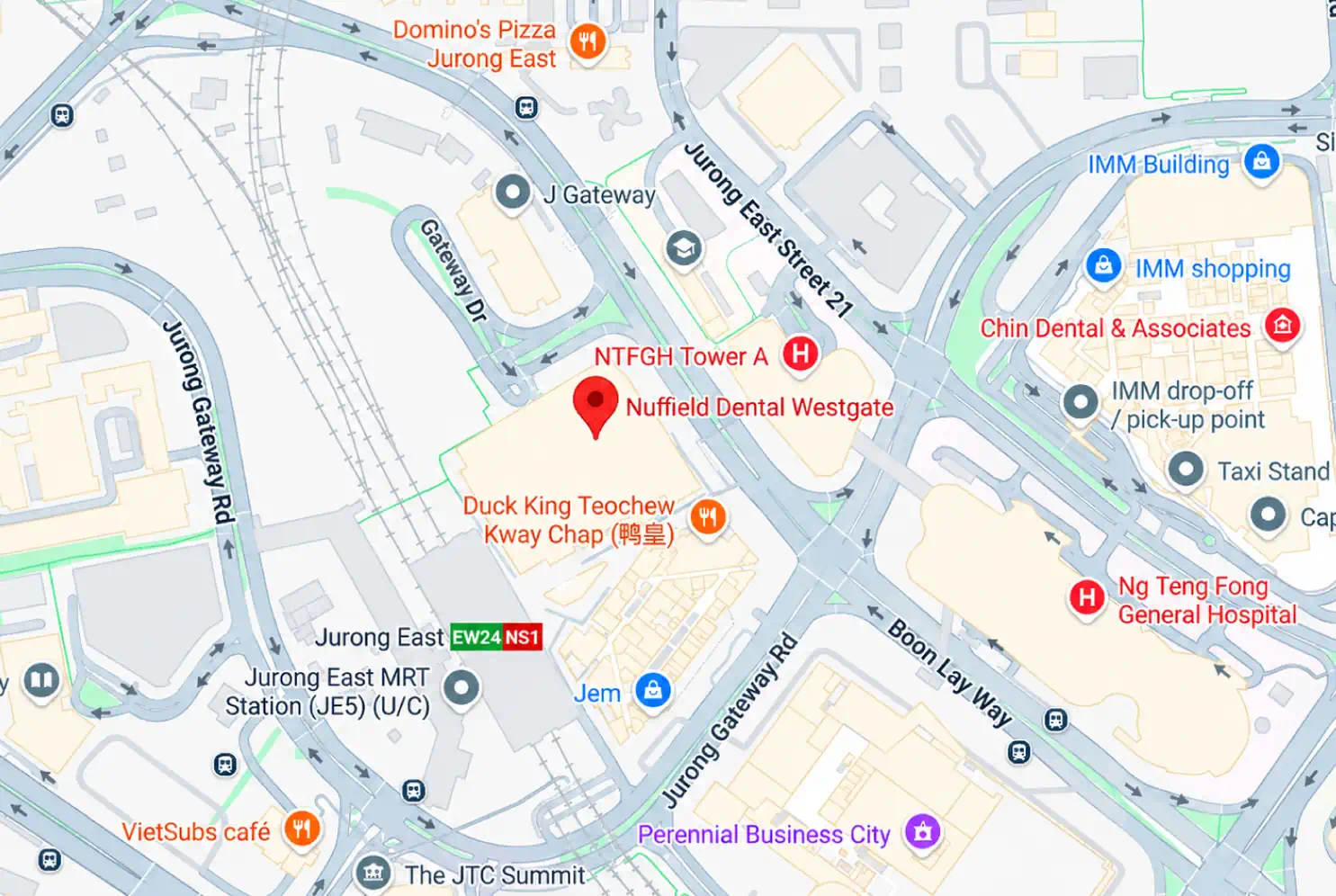
Westgate
3 Gateway Dr #04-32 Nuffield Dental Westgate, Westgate, Singapore, 608532
Available on Wednesdays and Fridays.





© 2026 Dr Prashanth Kanakamedala | All rights reserved | Privacy Policy | Digital Marketing by Remedo
