
Are Silver Amalgam Fillings Safe?
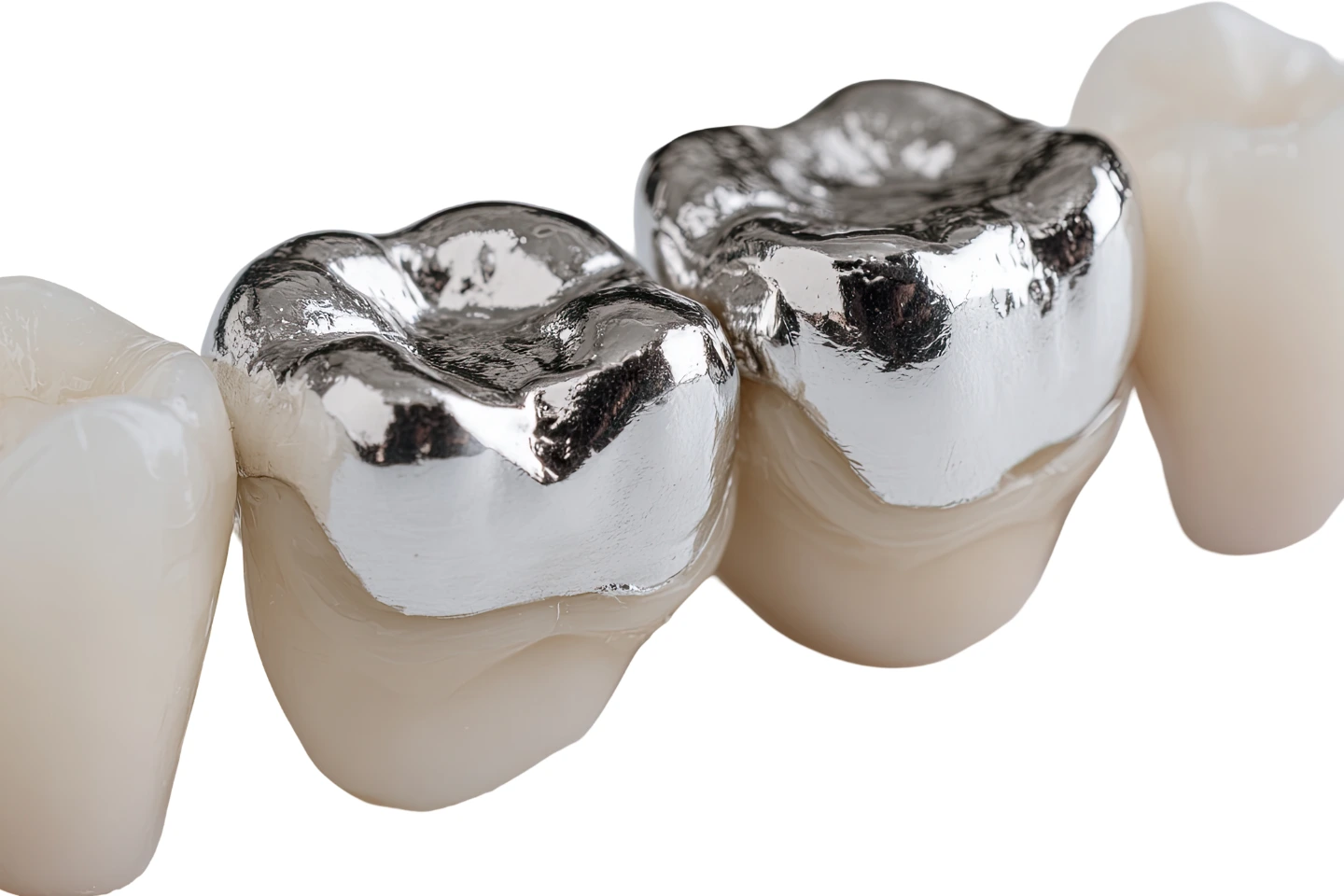
For most people, intact silver amalgam fillings are considered safe, and the FDA does not recommend removing them if they are in good condition. Removal makes sense when a filling is failing, when decay has started underneath it, or when you have a particular medical reason. It rarely makes sense just because the filling contains mercury.
I am asked about this often at my Orchard Road clinic, usually by patients who have read something alarming online. Here is what the evidence says, who should be more careful, and how I decide whether a filling stays or goes.
What Is an Amalgam Filling?
Amalgam is the traditional silver coloured filling used mostly in back teeth. It is made from a mix of metals, including silver, tin and copper, bound together with mercury. According to the FDA, amalgam is roughly half mercury by weight. Once mixed and set, it forms a hard, durable material, which is why it was used for so long.
Because mercury is a known toxic substance, it is natural to ask whether it belongs in your mouth. That is a fair question, so let us look at what the research actually shows.
What Does the Evidence Say About Safety?
The FDA states that the majority of evidence shows exposure to mercury from dental amalgam does not lead to negative health effects in the general population. The FDA also explains that amalgam releases low levels of mercury vapour that can be inhaled and absorbed by the lungs. The concern is real in principle, but the amounts from fillings are small.
The National Institute of Dental and Craniofacial Research (NIDCR) adds that the FDA's 2019 review of more than 100 mercury studies found that the small amounts of mercury from amalgam do not pose health risks to the general population. NIDCR also reports that studies it funded found no differences in kidney function or IQ test performance in children with amalgam compared with other fillings.
That said, "safe for most people" is not the same as "safe for everyone", and the next section matters.
Who Should Be More Careful?
The FDA names groups for whom mercury exposure may pose a greater health risk, and encourages non amalgam options where a dentist considers them appropriate. These include:
- Pregnant women and their unborn babies, and women planning pregnancy
- Nursing mothers and their infants
- Children, especially those younger than six
- People with neurological disease
- People with impaired kidney function
- People with a known allergy or sensitivity to mercury or other metals in amalgam
If you fall into one of these groups, tell me before any filling is placed. For new fillings, tooth coloured materials are the usual choice anyway.
When Does Removal Make Sense?
The FDA says it does not recommend removing amalgam fillings that are in good condition with no decay underneath, and that they should not be removed to prevent any disease unless a healthcare professional considers it medically necessary. I follow the same principle. Removal is worth considering when:
- The filling is cracked, worn or leaking. Gaps around the edge let bacteria in and new decay can form.
- There is decay under or around it. A filling that looks fine on the surface can hide a cavity, which is why X rays matter.
- The tooth around it has weakened or cracked. Older, larger fillings can leave a tooth thin and prone to splitting. Sometimes the right answer is a crown rather than another filling, and my guide to how a dentist decides between a crown and a filling explains how I judge it.
- You have a confirmed allergy or sensitivity. The FDA gives documented hypersensitivity to amalgam as an example of a medical reason.
- Your doctor advises it for a health condition. This should be a decision between you, your doctor and your dentist.
- You want a tooth coloured look. That is a legitimate choice, as long as you understand the trade offs below.
If none of these apply, an intact filling can usually be left alone and checked at each visit.
What Removal Involves, and Its Risks
Removing amalgam is not risk free. The FDA warns that removing intact fillings causes unnecessary loss of healthy tooth structure and temporarily increases your exposure to mercury vapour. That is the reason I will not remove sound fillings simply because a patient asks me to without first talking it through.
When removal is justified, the aim is to reduce exposure as far as possible. I am trained in the SMART protocol, which uses precautions such as strong suction, water cooling, isolating the tooth and protective equipment. You can read the full step by step process on my page about SMART amalgam removal at Orchard Road. No technique can be described as completely risk free, and I will always tell you that plainly.
What Replaces an Amalgam Filling?
The most common replacement is a tooth coloured composite resin, which does not contain mercury as an ingredient and bonds to the tooth so less healthy structure needs to be removed. Glass ionomer is another option, particularly near the gumline. When too little tooth remains, a dental crown protects what is left.
It is worth knowing that replacements are not necessarily longer lasting. NIDCR reports that in research on more than 700,000 composite and glass ionomer fillings in the United States, 16 percent failed within five years, mostly because of new decay or tooth breakage. That does not make composite a poor choice. It means a sound amalgam filling is not automatically worse than a new one, and it is one more reason to replace only when there is a reason.
If you are choosing a material for a new cavity, my page on dental fillings explains the options.
How I Check Whether Your Fillings Need Attention
When you come in, I look at each filling for cracks, wear, ditching at the edges and discolouration around it, and I take digital X rays where needed to see under the surface. I show you what I see so you can judge for yourself. Then I tell you which fillings are fine, which to watch, and which I would treat, and why.
Most of this happens during a routine dental checkup, which is why regular visits matter. Many problems are silent early on, as I explain in my post on dental problems a dentist can detect before they become serious. If you are curious about my wider approach to materials and the bite, see my page on holistic dentistry.
Frequently Asked Questions
Are silver fillings dangerous?
For most people, no. The FDA states that the majority of evidence shows mercury exposure from amalgam does not lead to negative health effects in the general population. It does advise extra care for pregnant women, young children, and people with neurological or kidney disease or a metal allergy.
Should I have my old silver fillings removed?
Not if they are intact and there is no decay underneath. The FDA does not recommend removing amalgam fillings in good condition. Removal is advised when a filling is failing, when decay has formed, or when there is a medical reason.
Does removing amalgam fillings improve health?
The FDA says intact fillings should not be removed to prevent any disease or health condition unless a healthcare professional considers it medically necessary. Removal itself temporarily increases mercury vapour exposure and can remove healthy tooth structure.
Do composite fillings contain mercury?
No. Composite resin does not contain mercury as an ingredient. It is made from a tooth coloured resin with glass particles.
Is amalgam removal painful?
It is done under local anaesthetic, so you should feel pressure but not pain. The tooth may be sensitive for a few days afterwards.
How long does it take to replace an amalgam filling?
It depends on the size of the filling and the condition of the tooth underneath. I can give you a clear estimate after examining the tooth.
Book a Check of Your Fillings
If you are unsure about your old fillings, the best next step is a proper look. I will tell you honestly whether anything needs doing. You can book an appointment at my clinic.
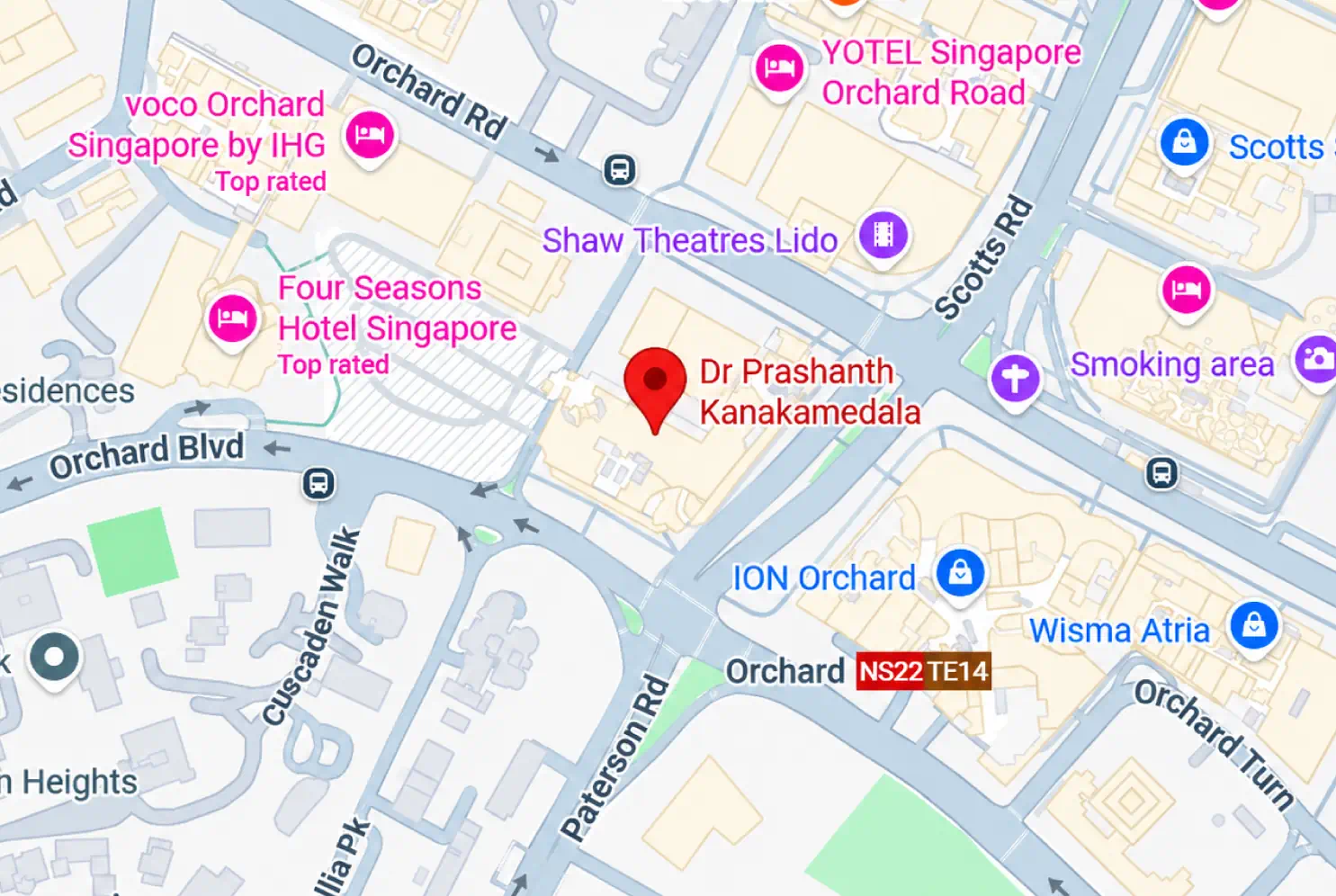


Landmark Orchard
501 Orchard Rd, #05-01 Nuffield Dental Jewel, Landmark Orchard, Singapore 238880
Available on Mondays, Tuesdays, Thursdays and Saturdays.
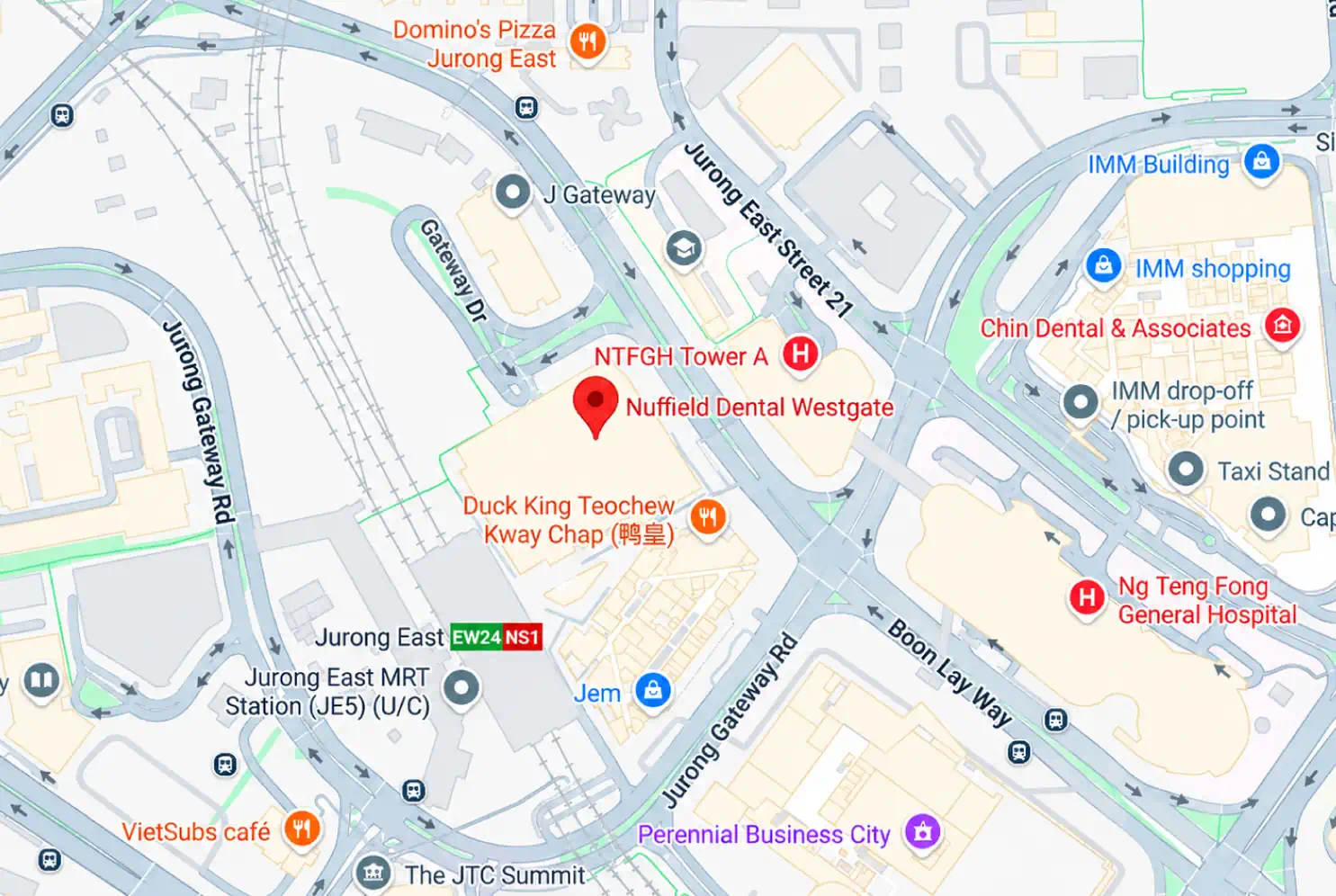
Westgate
3 Gateway Dr #04-32 Nuffield Dental Westgate, Westgate, Singapore, 608532
Available on Wednesdays and Fridays.





© 2026 Dr Prashanth Kanakamedala | All rights reserved | Privacy Policy | Digital Marketing by Remedo
