
Crown or Filling: How Does a Dentist Decide?

A filling repairs part of a tooth, and a crown covers all of it. If enough healthy tooth is left to hold a filling firmly, a filling is usually the better choice because it keeps more of your own tooth. If too little is left, or the tooth is cracked or already heavily filled, a crown is safer.
That is the short version. Here is how I actually make the call when you are sitting in my chair, so you can see why I recommend one over the other.
What Is the Difference Between a Crown and a Filling?
A filling replaces the part of a tooth lost to decay or wear. I remove the damaged area, then rebuild it with a material such as composite resin or glass ionomer. The rest of your tooth stays as it was.
A crown is a custom made cap that covers the whole visible part of the tooth. According to the American Dental Association, crowns restore a tooth to its normal shape and size, make it stronger, and can protect a weak tooth from breaking or hold a large filling when not enough tooth remains.
So the real question is not which is better. It is which one your particular tooth needs.
The Five Things I Look At
No single sign decides it. I weigh these together.
1. How much healthy tooth is left. This matters most. A filling needs enough sound tooth around it to anchor to. Once a cavity or a past filling takes up a large share of the tooth, the walls that remain become thin and can split under normal chewing.
2. Where the damage is. A cavity on a flat chewing surface is a different story from one that undermines a cusp, the pointed part that takes the force of a bite. If a cusp is weakened, a crown often protects it better.
3. Whether the tooth has been filled before. Each time a tooth is drilled and refilled, a little more natural structure goes. A tooth with several older fillings can reach the point where another filling would only delay the problem.
4. How deep the damage goes. If decay has reached the nerve, a filling alone will not be enough, and the tooth may need root canal treatment, usually followed by a crown to protect it. If you are not sure whether your symptoms point that way, my post on the signs you need a root canal is a good place to start.
5. Your bite and habits. If you grind or clench, or the tooth takes heavy chewing force at the back of your mouth, it needs more protection. A tooth that looks similar on an X ray can need different treatment in different mouths.
Signs That Point Toward a Filling
A filling is usually enough when:
- The cavity is small to medium and the surrounding tooth is strong
- The damage is on one surface and the cusps are intact
- The tooth has few or no previous fillings
- There is no crack, and the nerve is not involved
For everyday decay, a dental filling is quicker, keeps more of your tooth, and usually needs one visit.
Signs That Point Toward a Crown
I would more likely recommend a dental crown when:
- A large part of the tooth has been lost to decay or an old filling
- A cusp is cracked or weakened, or there is a crack that runs across the tooth
- The tooth has had root canal treatment, especially a back tooth
- You grind your teeth and the tooth is already worn down
- An old filling keeps breaking or failing, and replacing it again will not last
A crown is more involved than a filling, but it protects the whole tooth instead of patching one part of it.
What About the Middle Ground?
Sometimes neither a simple filling nor a full crown fits. An inlay or onlay is a custom made restoration, usually porcelain, that repairs a larger cavity while leaving more of the tooth than a crown would. It suits teeth that are too damaged for a standard filling but still have strong outer walls.
This is where an honest conversation matters. I will explain the options and what each one means for your tooth over the years, not only today.
What If You Wait?
A cavity does not stay the same size. A small one that needs a filling can grow into one that needs a crown, and later into one that needs a root canal, because decay often causes no pain until it reaches the nerve. That is the main reason I encourage regular dental checkups, so problems are found while the repair is still small.
Older silver fillings deserve a mention too. They do not always need replacing, but some fail with age. If you are wondering whether yours are due, read my guide on whether silver amalgam fillings are safe and when removal makes sense.
What Happens at Your Visit
I start with an examination and digital X rays, so I can see how much tooth is left and whether the damage is near the nerve. I show you the images and explain what I see. Then I lay out the options, including the more conservative one and the longer lasting one, and the reasons behind each.
If a tooth has chipped or cracked rather than decayed, the choices are slightly different, and I cover them in my guide on how to repair a chipped or cracked tooth.
Costs depend on the tooth, the material and the treatment needed, so I give you a clear estimate once I have examined you. You can also see our pricing page for general guidance.
Frequently Asked Questions
Is a crown better than a filling?
Not always. A filling keeps more of your natural tooth and suits smaller repairs. A crown suits teeth that are heavily damaged, cracked, or have had root canal treatment. The better option is the one that fits your tooth.
How do I know if I need a crown instead of a filling?
Only an examination and X rays can tell you for sure. Signs that point to a crown include a large cavity, a cracked tooth, a tooth with a big old filling, or a root canal treated tooth.
Can a large filling be replaced with a crown?
Yes. If a large filling is failing or the tooth around it is weakening, a crown is often the more lasting solution.
Does a tooth always need a crown after a root canal?
Often for back teeth, because they take heavy chewing forces and the tooth is weaker after treatment. Front teeth sometimes manage with a filling alone. I decide based on how much tooth is left.
Is getting a crown more painful than a filling?
No. Both are done under local anaesthetic, so you should feel pressure but not pain. A crown takes more than one visit, and some tooth sensitivity afterwards is normal.
Can a filling fix a cracked tooth?
A small, shallow crack can sometimes be sealed with a filling or bonding. A deeper crack usually needs a crown to hold the tooth together.
Book an Appointment
If you have a sore tooth, a failing filling, or simply want to know where you stand, I would be glad to take a look. You can book an appointment.
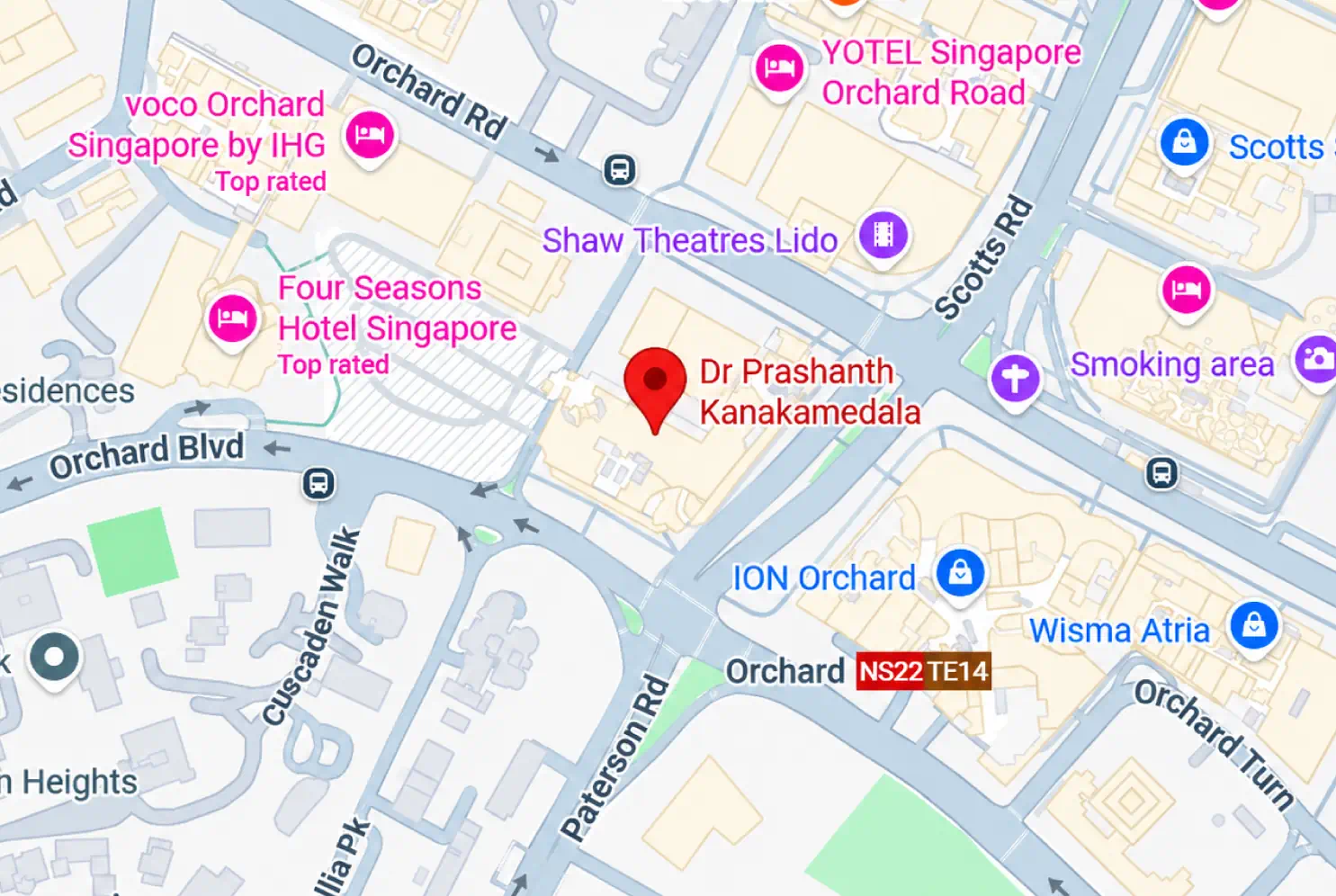



Landmark Orchard
501 Orchard Rd, #05-01 Nuffield Dental Jewel, Landmark Orchard, Singapore 238880
Available on Mondays, Tuesdays, Thursdays and Saturdays.
Westgate
3 Gateway Dr #04-32 Nuffield Dental Westgate, Westgate, Singapore, 608532
Available on Wednesdays and Fridays.





© 2026 Dr Prashanth Kanakamedala | All rights reserved | Privacy Policy | Digital Marketing by Remedo
